Accounting Essentials: Avoid Costly Mistakes From Day One
Most founders would rather spend their time on product, customers and fundraising than on VAT settings and charts of accounts. Modern cloud tools make that wish feel achievable: open an account, upload a receipt, send a QR invoice, and the books seem to take care of themselves. But the mistakes are as old as bookkeeping itself, and they surface at the worst moment: in a tax review, at year-end or when an investor asks for the numbers.
That tension ran through a recent webinar hosted by the Swiss Startup Association in partnership with Swiss21, the Abacus subsidiary that builds cloud business software for startups and SMEs. Fabian Schläpfer, Managing Director of Swiss21, and Elisha Dyer, Payroll and Accounting Specialist at hr admin gmbh and one of Swiss21’s digital coaches, walked participants through startup bookkeeping and payroll in practice.
Their message was not that founders should become accountants. It was that the most expensive errors are made early, that software only knows what you tell it, and that expert help, bought in the right doses, costs less than doing without it.
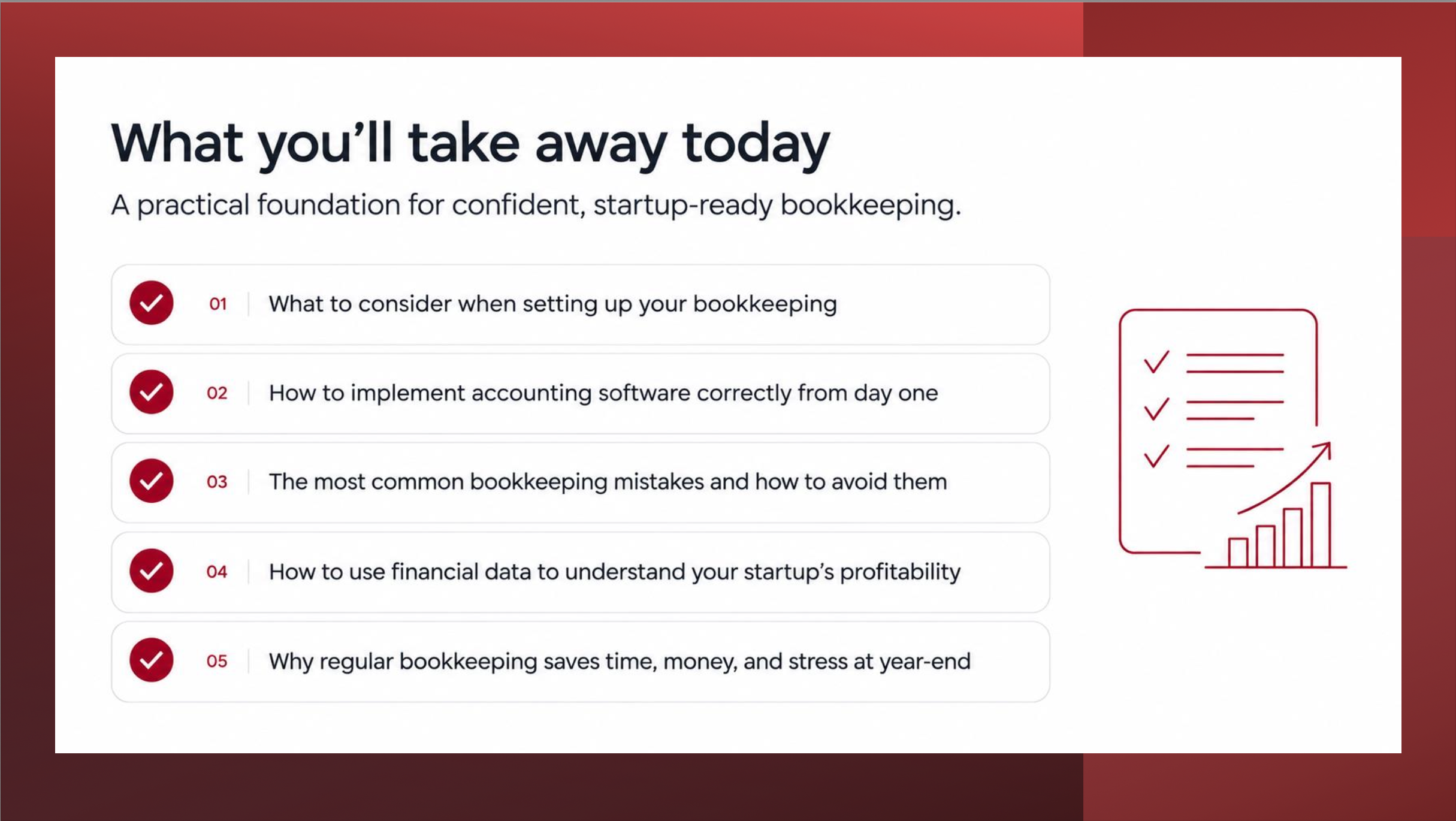
Five foundations for startup-ready bookkeeping. Source: Swiss21.
The Expensive Mistakes Are Made in Week One
Getting started takes minutes, Dyer showed. Enter your VAT or company identification number and the system hands you a ready-made chart of accounts. But being technically ready is not the same as being set up correctly. VAT is the classic trap: if your company is registered, every invoice must meet specific requirements, and a wrong setting repeats itself on every invoice you send. “I know this is all very boring,” Dyer said, “but unfortunately the rules are there for a reason.”
Revenue accounts matter just as much. Swiss accounting separates income from production, from the sale of goods and from services, and deciding at the start where each product or service is booked is what later makes your profit and loss statement useful. Get it wrong and you lose sight of which part of the business actually makes money. If you are unsure, Dyer advised, do not improvise: have an accountant or coach check the initial setup.
The cost of skipping that step is concrete. Dyer described a sizeable client that did everything itself and ended up paying her firm more than 1’000 francs to correct something that two clicks at the start would have prevented. “If you invest at the beginning, you will have a very peaceful life,” she said. “I promise you as much.”
Your Software Only Knows What You Tell It
The most striking warning concerned payroll, and it applies even to founders who pay themselves nothing. A company car used privately already counts as salary, Dyer explained, with a private share to declare and social contributions to pay. “Just because you’re not giving yourself any money doesn’t mean you don’t have anything to settle.”
When a participant asked how likely the payroll software was to pass an audit, her answer reframed the question. The tool calculates, pays and reports correctly, but it cannot know what you leave out. “If you don’t tell the software, it’s not going to say: ‘But mate, you’re driving a company car privately.'” Enter everything and you will be fine. Leave things out and you will not, at least not once the authorities notice.
The same limit applies to artificial intelligence. Asked whether good software eliminates bookkeeping costs, Dyer’s answer was a firm no. AI, she said, is “great to write a rude letter to the neighbour who’s always too loud, but AI does not understand Swiss law.” Automation removes the typing. Judgement about what must be declared, and how, still sits with people.
Budget for Expertise Instead of Avoiding It
Founders often avoid accountants for fear of an open-ended bill. Dyer’s alternative is to set expectations up front. Some of her clients simply say: “Invest four hours.” She uses the first 15 minutes to review everything, then spends the rest on what matters most. If the founder keeps the setup consistent, the following year’s check can shrink to half an hour. “You’re not going to eliminate it,” she said, “but it’s all about saving.”
Good advice can also pay for itself. One of Dyer’s clients, an exporter, recovers a significant amount of VAT each year that he would not manage on his own. And clean books are worth more than compliance. As Schläpfer pointed out, investors will eventually want to see your books in due diligence, and banks will ask for them when you need credit. Consistent records turn those moments into a formality rather than a fire drill.
The lesson for founders is simple: treat accounting expertise as a planned, recurring cost with a clear budget, not as a luxury you buy only when something has already gone wrong.
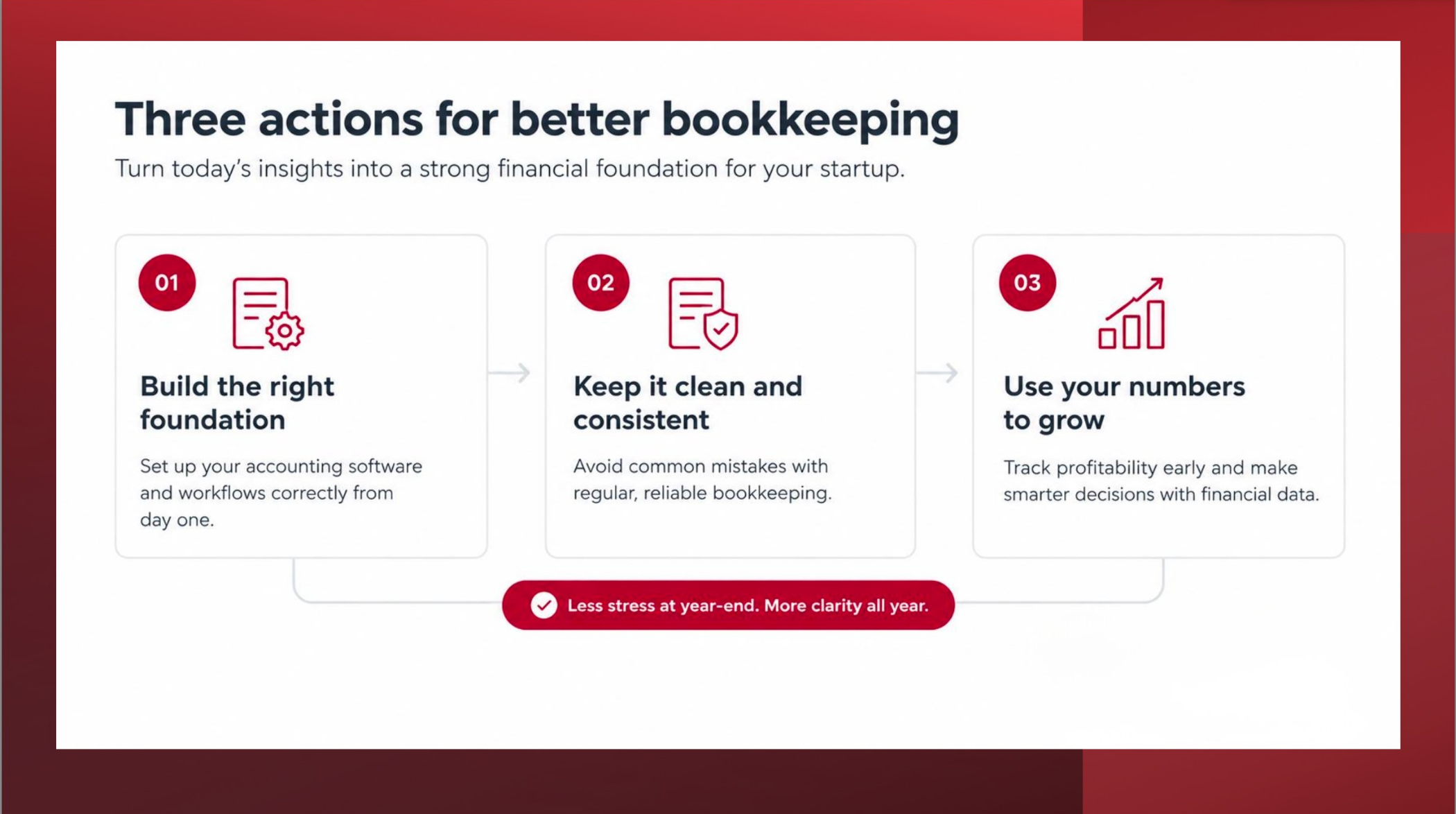
Three actions for a strong financial foundation: set up correctly, stay consistent, use your numbers. Source: Swiss21.
Key Takeaways for Founders
- Fast onboarding is not a correct setup. Check VAT settings and revenue accounts before you send your first invoice.
- Structure revenue accounts so your profit and loss statement shows which activities actually make money.
- Private use of company assets, such as a car, can count as salary even if you pay yourself nothing.
- Software and AI only process what you enter. Responsibility for declaring everything stays with you.
- Give your accountant a fixed budget and clear priorities instead of avoiding them altogether.
- Keep your books investor-ready from day one, because due diligence and bank requests arrive sooner than expected.
Final Thoughts
Developers talk about technical debt: shortcuts that save time today and cost far more to unwind later. Bookkeeping has its own version. A misconfigured VAT setting, an undeclared benefit or a revenue account that mixes everything together does not hurt in month one. It compounds quietly until a review or a funding round forces someone to untangle it.
The irony is that today’s tools make this debt easier to accumulate, not harder. When setup takes five minutes and receipts book themselves, it is tempting to assume the thinking has been done too. It has not. Software has taken over the repetitive work, which is exactly why the few decisions that remain deserve more attention, not less.
The founders who rarely think about their books are usually the ones who thought about them carefully once, at the very beginning. That small investment is what frees them to focus on what they set out to build.
About the Webinar
This article is based on the webinar Accounting Essentials for Startups: Avoid Costly Mistakes Early, hosted by the Swiss Startup Association in partnership with Swiss21 on 1 October 2026. Fabian Schläpfer, Managing Director of Swiss21, and Elisha Dyer, Payroll and Accounting Specialist at hr admin gmbh, showed how Swiss startups can set up bookkeeping and payroll correctly from day one, avoid the most common mistakes and use their financial data to grow.
The full webinar replay is available in the Swiss Startup Association Education Library, free for members. Not a member yet? Join the community and get access to expert sessions like this one.
Subscribe to our newsletter to hear about upcoming webinars and events.
News
Other, related articles you may like