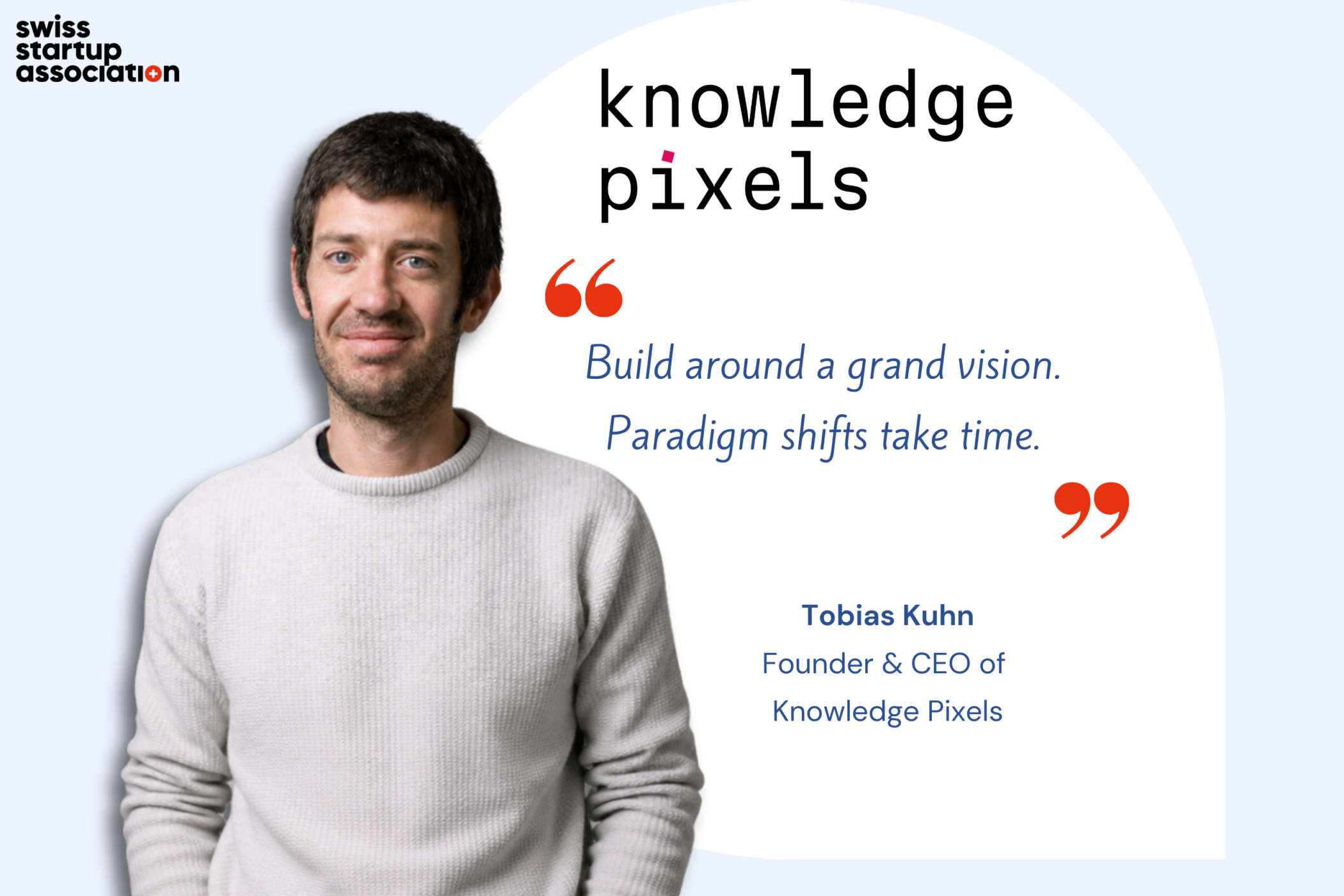
Meet Tobias Kuhn, Founder & CEO of Knowledge Pixels
Tell us more about Knowledge Pixels.
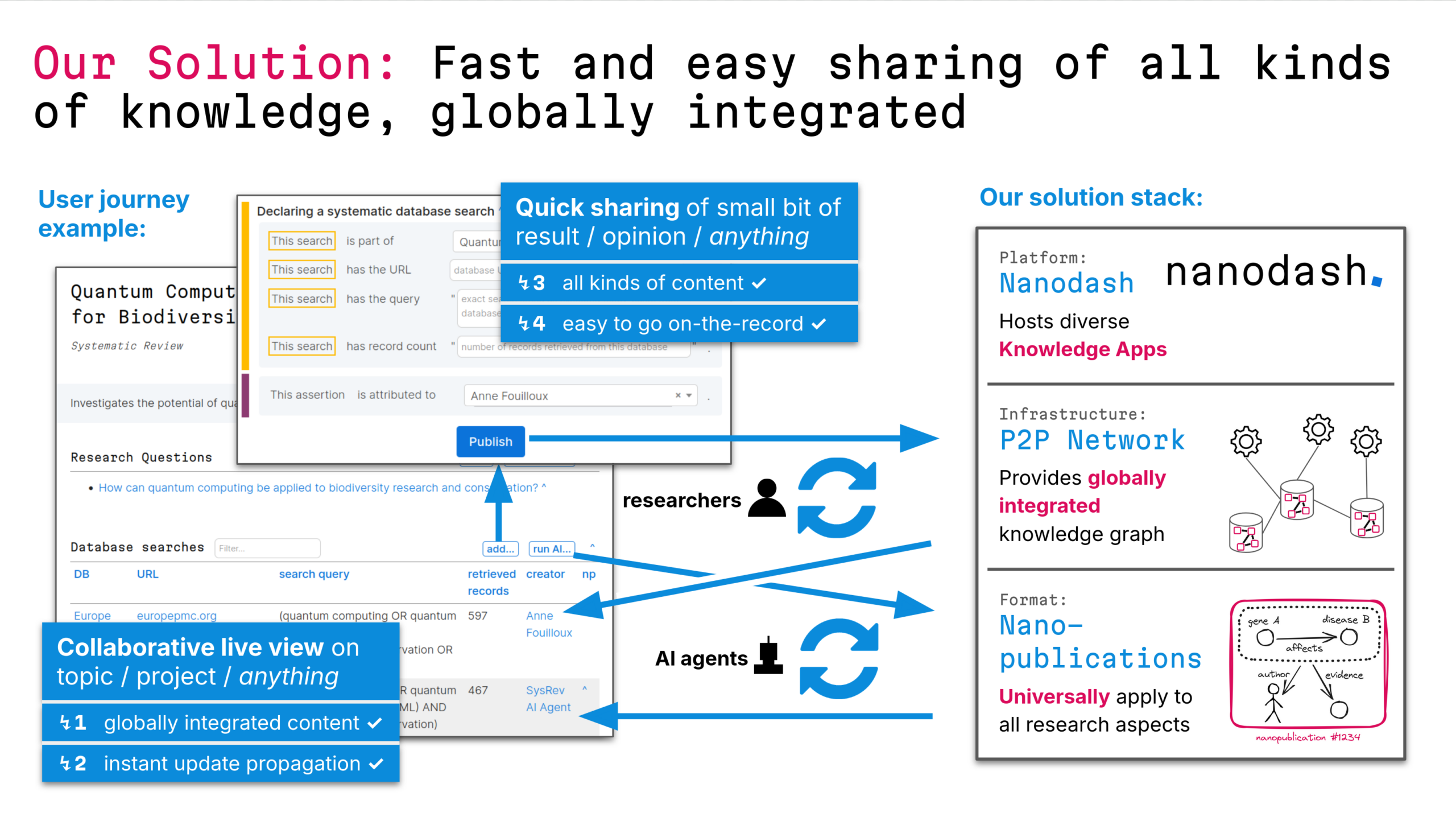
Knowledge Pixels provides the first universal and globally integrated knowledge-sharing platform for researchers. Built on nanopublications, small and precise knowledge graph snippets, it enables researchers and AI agents to share and connect all kinds of knowledge within a single global network.
Please give some more details of your startup story: what was the “aha” moment that led to the idea for your startup?
What if researchers worldwide could share knowledge in a decentralised way, yet anyone querying it would experience it as one seamless, trust-aware global knowledge graph? When I realised nanopublications could make this possible, I knew it was worth dedicating my career to. After a decade of research, I founded Knowledge Pixels to turn that vision into reality.
So, what’s next for you—what’s a bold goal you’re chasing right now?
We are currently raising our seed round to scale our platform and community. Our bold goal is to make nanopublications the default way to share scientific knowledge in all its forms, from findings and methods to profiles, events, and discourse. We already have a dedicated group of early adopters, and now it is about turning that into a broader movement.
Which decision had the most unexpected positive impact on your startup?
Using nanopublications not just for scientific findings, but for everything: opinions, social links, project updates, and events. This transformed our platform from a niche tool into a universal infrastructure for scientific communication and beyond. It opened entirely new use cases and enables a more fundamental transformation of how knowledge is shared.
How did you build your team, and what helps you maintain your startup culture?
We built our team around deep domain expertise and a shared mission. Everyone genuinely cares about making science more open and efficient, and that shows in the way we collaborate. We stay small and focused, work closely across Zürich and remotely, and keep decisions close to the people doing the work.
If you could do it all over again, what would you do differently? What are your biggest learnings?
I would spend more time on community building from day one. We had strong technology early on, but grassroots adoption takes longer than expected. My biggest learning is that in deep-tech areas, early adopters are your most powerful marketing channel. Investing in them should come before investing in any other growth strategy.
Building a startup requires resilience, how do you stay focused during tough times?
I anchor myself in the long-term vision: the way science shares knowledge is fundamentally broken, and we are building a solution. When challenges arise, I zoom out and reconnect with that broader purpose. Paradigm shifts take time. Having a small, committed team that shares this conviction makes all the difference.
One piece of advice for someone who is just starting out with their startup?
Think long term. Do not chase incremental steps. Build around a grand vision. That way, unforeseen disruptions, such as the AI revolution, strengthen your idea instead of making it obsolete. Launch a startup because you have a vision for how the world should work, not simply because you want to run a startup.
What’s your outlook on the future of the Swiss startup scene, and how can it compete internationally?
Switzerland has outstanding research institutions, a stable environment, and increasingly strong startup support structures. To compete internationally, we need to be bolder in backing deep-tech and open-source ventures, not just fintech and biotech. The potential is there. Now it requires more decisive action.
What value do you see in being part of the Swiss Startup Association?
Being part of the Swiss Startup Association connects us to the broader Swiss startup ecosystem. As a startup focused on scientific knowledge sharing, we can sometimes feel isolated. The SSA provides a community of founders facing similar challenges around fundraising, hiring, and scaling. Its political advocacy for better startup conditions is equally important.
Is there anything else you would like to share with us?
If you are interested in research and curious about how nanopublications can significantly improve global knowledge sharing, visit our site here. We are always looking for collaborators and early adopters who share our vision of globally integrated knowledge sharing.
Connect with Tobias on LinkedIn!
-
Author
info@swissstartupassociation.ch -
Published
09.04.2026 -
Category
Main -
Share on Linkedin
-
News
Other, related articles you may like