Meet our Scaleup Member: Claudio Grisch, CEO of HotelCard
Tell us more about HotelCard.
HotelCard is a subscription-based booking platform that helps hotels fill empty rooms without charging them a commission. Members enjoy discounts of up to 50 percent at more than 500 hotels. Our goal is to promote domestic hotel stays and offer a smart, sustainable alternative to travelling.
How did your company move from early startup to a scaleup — what were the key milestones?
The key was bringing in some experienced people with fresh perspectives, industry know-how and exposure to best practices. Many startups fear losing their edge and therefore shy away from hiring seasoned professionals. You want to stay creative and agile, but striking the right balance is essential if you want to bring the organisation to the next level.
What bold strategic goals or expansion plans are you currently pursuing?
Our “Halbtax” hotel model is unique to Switzerland and cannot be replicated 1:1 abroad. This is why, until now, we have focused solely on the Swiss market. Last year, we introduced a new B2B white-label model which has proved very successful.
What was a turning point or key decision that helped you unlock growth at scale?
We made three key decisions. First, we fully connected our hotel partners via API and provided them with modern revenue management tools. Second, we rebranded to give ourselves a fresh and modern look. Third, we eliminated our legacy “spaghetti code” and introduced a new system architecture. This has finally enabled us to roll out our new front end, which is based on React.
How have you scaled your team and operations while maintaining your culture?
Five years ago, we defined our company’s values and behaviours together as a team. These include showing passion in everything we do, embracing an entrepreneurial mindset, taking ownership and getting things done. Even as the team grows and we add more structure, we continue to promote collaboration and avoid silo thinking. So far, we have managed to preserve these values, which is highly motivating for everyone.
What has been your strategy for expanding to new markets, and have you considered growing internationally?
Ten years ago, HotelCard launched a German subsidiary, but it was too soon for expansion. Now, however, we plan to try again in collaboration with local partners. Our plan is to first focus on our existing hotel portfolio, gradually adding German hotels over time. The potential is significant. Austria receives more than ten times as many German visitors as Switzerland, yet Google search volumes are only three times higher. This suggests that interest is there, but price perception is holding people back.
How has your funding strategy evolved as you scaled, and how do you balance raising capital with maintaining control and aligning investor interests?
We have been fortunate to fund our growth almost entirely through cash flow so far. Our investors are mostly angel investors with a long-term perspective, which allows us to focus on sustainable growth rather than growth at any cost.
If you could do it all over again, what would you do differently? What are your biggest learnings?
Like all startups, we paid the price for our early mistakes and would certainly do many things differently today. One of the biggest was focusing too much on sales instead of prioritising product quality and customer satisfaction from the start. In a subscription model and in the age of online reviews, that is a mistake you cannot make twice. Fortunately, we turned things around in time, and the customer — both hotel and end consumer — is now at the centre of everything we do.
One piece of advice for someone who is just starting out with their startup?
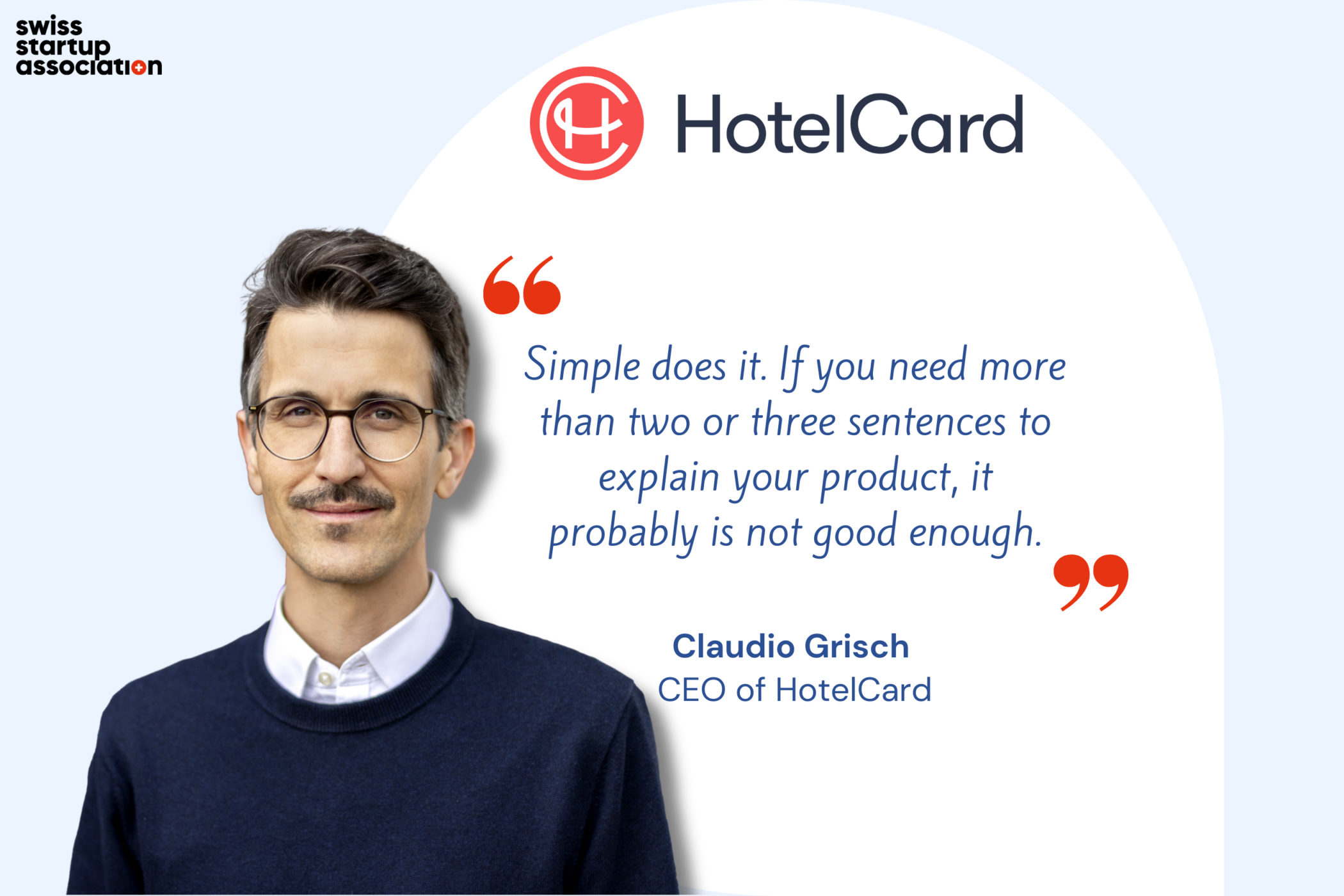
Simple does it. If you need more than two or three sentences to explain your product or service, it probably is not good enough. Your product should speak for itself. As soon as you can afford it, hire people who are even smarter than you to help you reach the next level.
Have there been any scaling “traps” or mistakes you would caution others about?
If your business model relies heavily on IT, it is important to constantly review your system architecture and upgrade your technology stack. Many companies eventually find themselves stuck with legacy systems that cannot scale and become highly dependent on a few coders who still understand the old code.
What is your outlook on the future of the Swiss startup scene, and how can it compete internationally?
It is great to see so much talent entering the startup world. Twenty years ago, when I graduated from St. Gallen, founding a company was the last thing on most people’s minds. Today, when I speak to students, I see a completely different attitude. People are hungry again to build something meaningful or join a company where they can truly have an impact.
Is there anything else you would like to share with us or the community?
Please feel free to reach out if you would like to connect and share your own experience.

Follow Claudio on LinkedIn!
News
Other, related articles you may like